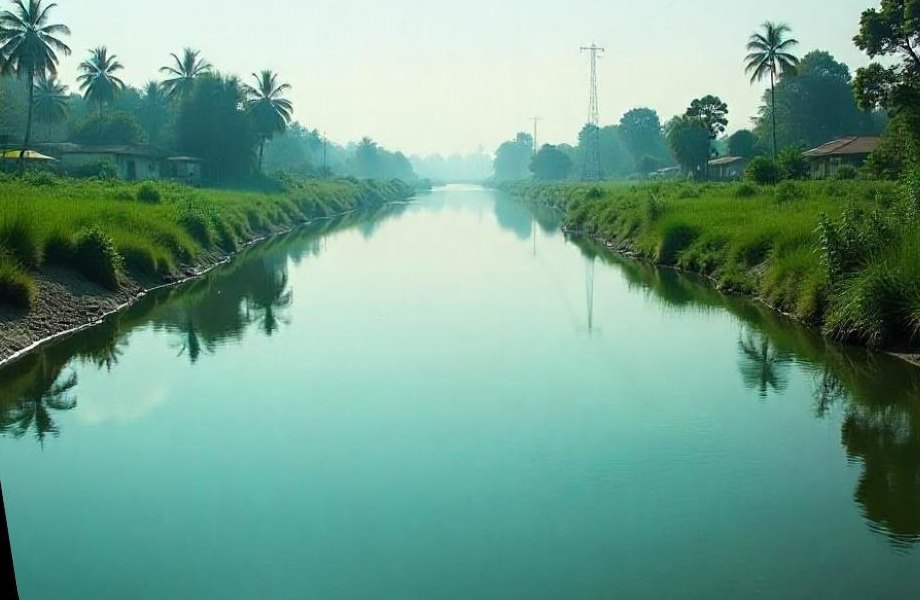
Every national programme needs its proof. For the Restore Ghana Project, that proof is ninety days on the River Offin, a pilot chosen precisely because the Offin is hard: a Pra tributary running through the historic heart of gold country, heavily silted, heavily mined, and heavily depended upon.
The pilot is designed to answer the questions every stakeholder should ask before a full national rollout. Can dredging restore natural depth and flow at an acceptable cost per kilometre? Can contaminated sediment be contained safely while clean sand is recovered and sold? Do embankments and replanting hold the banks through a rainy season? And do the communities alongside the work experience it as employment and restoration, or as another intrusion?
Everything is instrumented. Turbidity and water chemistry are measured upstream and downstream; channel cross‑sections are surveyed before and after; costs, hiring, and recovered‑materials revenue are accounted publicly to the project’s partners. The deliverable is not just a cleaner river, it is a comprehensive impact report that converts ninety days of operations into the evidence base for the Pra and Ankobra phases.
This is the discipline the galamsey fight has always lacked: not promises about what will work, but a measured demonstration on a real river, published for scrutiny, with the full programme conditioned on its findings.
When the report lands, Ghana will have something it has never had in this fight: numbers of its own, from its own river, showing exactly what restoration costs and exactly what it returns.
Back to Insights & Press